Proposal Project: A New Student Center
Student hub
A place for expression
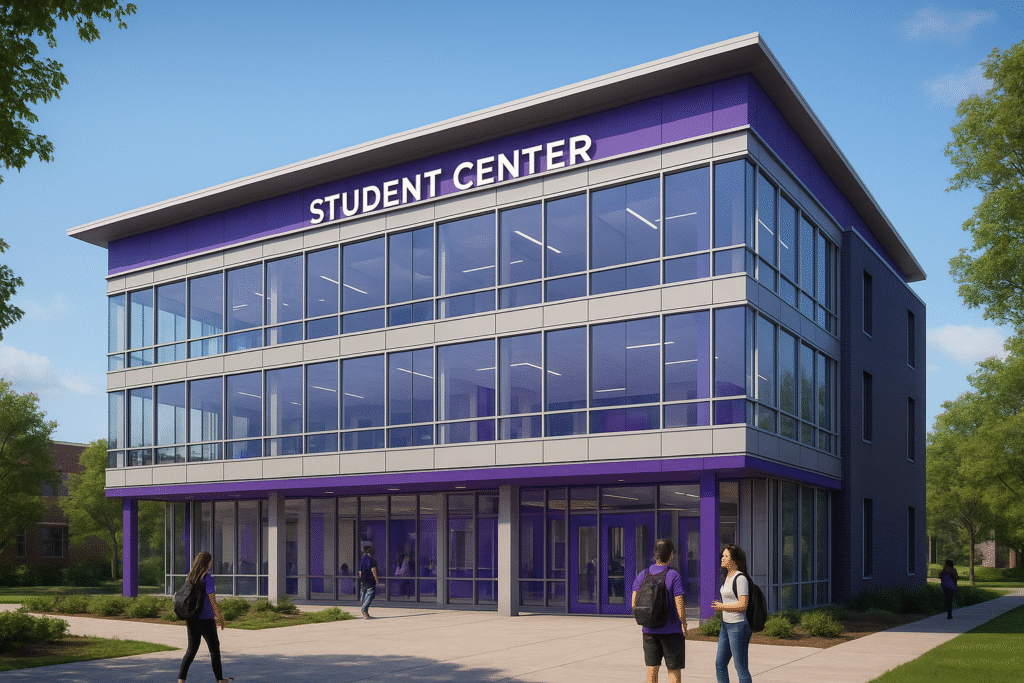

Figure 1 ideal student center and student logo
📍Location
Wingate Hall, 200 Convent Ave, New York, NY 10031
The Rag Shake Shop
Ruijie Xu
Qifu Lei
Soumik Jobayed
Yahir River
Introduction:
What’s the number one issue adults from 18-25 face day to day? Loneliness, which has been a major growing problem since the pandemic. During the pandemic we were so glued to our screens we have forgotten how to socialize. We have been so glued to our screens that we have forgotten how to socialize with a normal person face to face. This is further supported by a Harvard study which surveyed a total of 950 Americans and found that 61% of young people ages 18-25 reported experiencing profound loneliness. With people’s mental health taking such a hit we need a place where people can go to find new friends. We students at City College need a place where people can socialize freely. We are a place that has an environment that invites laughs and meaningful discussions. We need a student center. But, just having a student center isn’t good enough. We need facilities that will make it easy for people to not only interact, but build those meaningful long lasting relationships. But, would the facilities be good enough that people would want to come? Well according to our survey it sure does, but what exactly would be in the student center? Keep reading to find out.
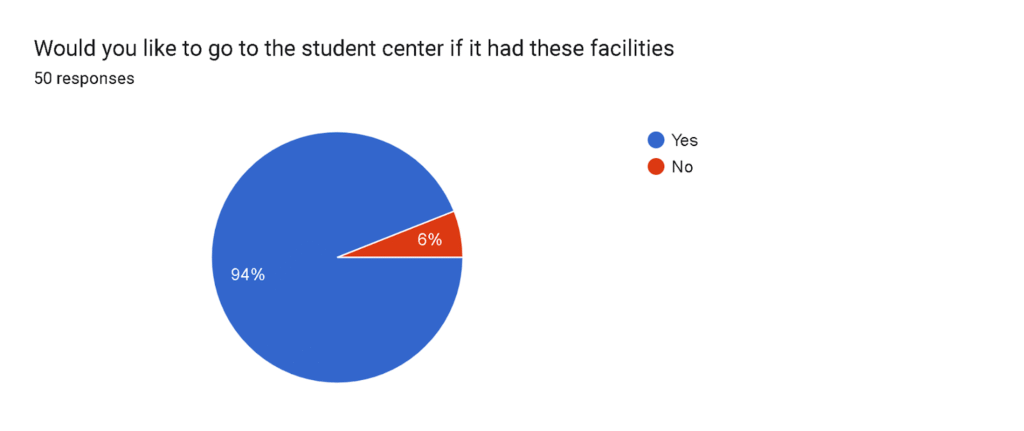
Figure 2- Student survey
Facilities
Our student center will be located at Wingate Hall, 200 Convent Street, New York, NY 10031, which is an existing campus building at the City College of New York. Our project focuses on renovating and redesigning the interior layout of Wingate Hall rather than building a new facility. Therefore, our design does not include the installation of new elevators. By making use of the existing structure, the student center will promote interaction and connection among students, making the campus a warmer and more people-oriented place.
Our newly designed student center will be a four-level building that accommodates all students. On the first floor students will have access to a lounging area with comfortable seating, ping pong and pool tables with vending machines and a cafe for an easy meal. The second level will be the study haven for students. They will have access to many studying resources such as a library, a tutoring center and mini cubicles to have privacy while studying. We intend to make this a quiet space where students can be the most focused and comfortable. Additionally the third floor will be packed with gaming equipment for our gamers. We plan to make the third floor a gaming room where students can compete in esports tournaments in a computer lab, full of High HD monitors, fast internet and high-tech computers. Finally our fourth floor will fit explore creativity for our talented students. The fourth floor will be packed with its own musical instruments, both electric and acoustic for students. Along with a music production room, acoustic rooms and a rehearsal room so that our students can engage with art and performance.
Our ideal student center will cover about 18,000 square-feet across four floors, with each one carefully sized. The first floor will be about 4,150 square-feet and this includes about 1000 square- feet of a lounge area, 900 square-feet for student arts and 800 square-feet for our pool and ping pong tables. It also includes a 600 square-foot cafe and a 400 square foot lobby. Restrooms and storage will have their own little section. This layout is purposefully designed to accommodate students to the best of our ability.
Our second floor is the largest and has a total of 6,460 sq feet, including a 2000-square-feet library, 1,200 square feet of computer labs, and about 960 square feet of study rooms. This floor also includes cubicles, a tutor center, group collaboration rooms, and a restroom all finalizing up to 6,460 square feet
Our third floor is planned to be about 4,550 square feet with a 2,000 square-foot gaming room and about 1,500 square-foot computer lab suited with fast internet and high HD monitors. It will also include a streaming production lounge (400 square-feet) and a snack along with restrooms and tech storage all combining towards a total of 4,500 square-feet
Finally our fourth and last floor is intended for music and creativity. We will need sound proof walls and rooms. Our fourth floor will be about 3,600 square-feet with the majority of that taken up by our large music rehearsal room which is about 1,200 square-feet. This floor includes a music production room that will be 900 square-feet, an acoustic room, a booth, instrument storage,instructor office, and restrooms that all come up to 3,600 square-feet.
Figure-3 the student center layout
Cost:
The following budget chart provides a detailed cost breakdown for each floor of the proposed Student Center, including interior finishing, furniture, and equipment. It illustrates how funds are allocated to create functional and engaging spaces for students.
| Area | Size (sqf) | Interior Finishing ($/sqf) | Finishing Subtotal ($) | Furniture & Equipment (List) | Furniture Cost ($) | Total ($) |
| Lounge Rooms | 1,000 | 80 | 80,000 | 6 sofas, 4 coffee tables, 2 TVs, bookshelves, wall art, area rugs | 35,000 | 115,000 |
| Student Arts Room | 900 | 85 | 76,500 | 16 stools, 6 easels, storage cabinets, lighting fixtures | 30000 | 106,500 |
| Pool Tables / Recreation Area | 800 | 70 | 56,000 | 2 pool tables, 1 foosball table, 6 chairs, 2 game consoles, speakers | 28,000 | 84,000 |
| Café / Small Kitchen / Vending | 600 | 90 | 54,000 | Coffee machine, refrigerator, microwave, 2 vending machines, 6 sets of tables and chairs | 40,000 | 94,000 |
| Reception / Lobby / Informal Seating | 400 | 75 | 30,000 | Reception desk, 2 sofas, display screen, bulletin board | 18,000 | 48,000 |
| Restrooms (Public) | 250 | 100 | 25,000 | Toilets, sinks, mirrors, hand dryers | 10,000 | 35,000 |
| Storage / Back of House | 200 | 60 | 12,000 | Shelves, storage boxes, utility racks | 5,000 | 17,000 |
| Subtotal | 4,150 | 333,500 | 166,000 | 499,500 | ||
| Contingency (10%) | 50,000 | |||||
| TOTAL (FIRST FLOOR) | 550,000 | |||||
Figure4- 1st floor cost
| Area | Size (sqf) | Interior Finishing ($/sqf) | Finishing Subtotal ($) | Furniture & Equipment (List) | Furniture Cost ($) | Total ($) |
| Small Study Rooms | 960 | 80 | 76,800 | 8 study desks, 8 chairs, 4 small whiteboards, lamps, shelves | 25,000 | 101,800 |
| Library / Reading & Stacks | 2000 | 85 | 170,000 | Bookshelves, reading tables, 20 chairs, soft seating, lighting | 45,000 | 215,000 |
| Cubicles / Quiet Workstations | 800 | 75 | 60,000 | 10 cubicles, task chairs, divider panels, desk lamps, outlets | 20,000 | 80,000 |
| Tutor Center / Offices | 600 | 85 | 51,000 | Office desks (4), chairs (8), whiteboard, filing cabinets | 18,000 | 69,000 |
| Group Collaboration Breakout | 500 | 75 | 37,500 | Round tables (3), 12 chairs, monitor | 15,000 | 52,500 |
| Restrooms | 400 | 100 | 40,000 | Toilets, sinks, mirrors, hand dryers | 8,000 | 48,000 |
| Subtotal | 5,260 | 435,300 | 131,000 | 566,300 | ||
| Contingency (10%) | 56,630 | |||||
| TOTAL (SECOND FLOOR) | 622,930 | |||||
Figure 5- the 2nd floor cost
| Area | Size (sqf) | Interior Finishing ($/sqf) | Finishing Subtotal ($) | Furniture & Equipment (List) | Furniture Cost ($) | Total ($) |
| Large Gaming Room (E-sports / Social Gaming) | 2,000 | 85 | 170,000 | 10 gaming stations, 10 gaming chairs, LED lighting, soundproof panels, large screens | 45,000 | 215,000 |
| Computer Lab / Additional PCs | 1,500 | 80 | 120,000 | 30 computers, 30 chairs, desks, projector, server rack, wiring setup | 40,000 | 160,000 |
| Snack Area / Small Lounge (1) | 300 | 75 | 22,500 | 2 sofas, 1 vending machine, 2 tables, 6 chairs | 8,000 | 30,500 |
| Snack Area / Small Lounge (2) | 300 | 75 | 22,500 | 2 sofas, 1 vending machine, 2 tables, 6 chairs | 8,000 | 30,500 |
| Restrooms + Tech Storage | 350 | 95 | 33,250 | Toilets, sinks, mirrors, hand dryers, storage shelves | 7,000 | 40,250 |
| Subtotal | 4,450 | 368,270 | 108,000 | 476,270 | ||
| Contingency (10%) | 47,627 | |||||
| TOTAL (THIRD FLOOR) | 523,897 | |||||
Figure 6- the 3rd floor cost
| Area | Size (sqf) | Interior Finishing ($/sqf) | Finishing Subtotal ($) | Furniture & Equipment (List) | Furniture Cost ($) | Total ($) |
| Large Music Rehearsal Room (Ensemble) | 1200 | 95 | 114,000 | Grand piano, 10 music stands, 20 chairs, sound panels, conductor podium | 40,000 | 154,000 |
| Music Production Studio (Control + ISO Room) | 900 | 100 | 90,000 | Mixing console, 2 studio monitors, 2 computers, soundproofing foam, recording booth setup | 35,000 | 125,000 |
| Practice / Acoustic Rooms | 800 | 90 | 72,000 | 8 small rooms, acoustic insulation, chairs, music stands, small pianos | 30,000 | 102,000 |
| Isolation / Booth / Instrument Storage | 200 | 80 | 16,000 | Storage racks, acoustic doors, instrument lockers | 7,000 | 23,000 |
| Restrooms | 150 | 100 | 15,000 | Toilets, sinks, mirrors, hand dryers | 5000 | 20,000 |
| Subtotal | 3,250 | 307,000 | 117000 | 424,000 | ||
| Contingency (10%) | 42,400 | |||||
| TOTAL (FOURTH FLOOR) | 466,400 | |||||
Figure7 – 4th floor cost
| Floor | Cost |
| First Floor | 550,000 |
| Second Floor | 622,930 |
| Third Floor | 523,897 |
| Forth Floor | 466,400 |
| Total Cost $ | 2,163,227 |
Benefit:
A well-designed students center provides a wide range of benefits that extend beyond simple recreation. The most significant advantage is that it helps reduce loneliness among young adults,a growing problem especially after the pandemic. Research cited in our introduction shows that 61%of people aged 18 to 25 experience serious loneliness, meaning many students struggle to find safe social spaces on campus.
So the student center directly responds to this issue by creating an environment where students can naturally meet new people, build friendships, and develop a sense of belonging. Our center’s ground-floor lounge, relaxation area, and café allow students to interact and unwind in a relaxed atmosphere, which is especially important in today’s entertainment-driven world.
Beyond its social function, the student center also enhances learning efficiency. The second-floor study rooms, library, computer area, and tutoring center provide students with a quiet, resource-rich learning environment, helping them focus, collaborate on tasks, or access academic support. For students unable to study at home or finding suitable spaces in the library, these spaces effectively reduce stress and improve academic performance.
The student center also offers opportunities for students to explore their interests and showcase their creativity. The third-floor recreation area helps students relax after heavy classes, while the fourth-floor arts and music spaces allow students to participate in activities such as painting, design, and music production, promoting self-expression and personal growth. Especially for day students, the student center serves as a vital hub for staying on campus, participating in activities, and integrating into the community.
While student centers offer many benefits, they also have some potential limitations. First, the costs of construction and maintenance are very high, including renovations, equipment,cleaning staff, and daily operating expenses, which can increase the financial burden on schools.
Another issue I noticed is that when we were building the student center, we paid attention to the construction time and safety issues.Large-scale construction projects often require months or even a year to complete, meaning that parts of the campus may be fenced off for extended periods, obstructing roads and impacting students’ daily access and activity space. Noise, dust, and traffic restrictions during construction can also disrupt the learning experience and the quiet campus environment. Furthermore, strict adherence to construction safety regulations is crucial to prevent dangerous situations such as falling objects, mechanical malfunctions, or personnel accidentally entering the construction site. Inadequate management can turn the construction site into a safety hazard, potentially leading to injuries to students or faculty. The university not only bears the burden of oversight but also needs to invest additional funds and personnel to ensure the site meets safety standards. Therefore, the construction of a student center inherently presents short-term inconvenience and risks, requiring careful planning and management.
Furthermore, the operation of student centers significantly increases campus energy consumption. Computers, gaming equipment, televisions, recording equipment, and air conditioning and lighting that operate for extended periods all contribute to increased electricity demands. Facilities such as coffee machines and microwaves also consume additional energy and water. This not only increases operating costs for the school but also creates greater environmental pressure, posing challenges to the campus in achieving its sustainable development goals. Therefore, energy costs and environmental issues are important drawbacks that must be considered when constructing student centers.
With these features such as the tutoring center,the music room, and the gaming room we allow people creative freedom and express themselves in many ways. If we don’t have this, it will ruin people’s chances of meeting new people and being able to have a safe place to socialize. Without the music room we ruin people’s creativity and without the tutoring room we ruin people’s academic success. So why make that statistic of over 60% of people being lonely any higher. Why make your life at college be glued to a screen. Instead let’s create change in not only your lives, but the lives around you. Let’s create the student center today.
Student bio:
Soumik Jobayed has lived an eventful life. He studied computer science for 4 years in Bayside high-school. From there he wanted to learn Mechanical Engineering from ccny. From working as a painter for a couple of years; he also had a teaching job for elementary students for summer. He’s learned to play chess, cook, and even learn how to read in a new language. He’s a hard worker who doesn’t know when to give up and is reliable.
Yahir Rivera is a second year student in The City College of New York. He is currently pursuing architecture with the intent of getting his bachelors. Growing up Legos was a big part of his childhood. He naturally gravitated towards creating and building.
He eventually interned at the MET and had hand-on experience with equipment such as 3D printing and drawing layouts. Throughout his experience at the MET, he started improving on his social skills such as networking in order to make strong connections. Alongside his social skills, Yahir has been improving on history while also learning ancient building techniques. Although Yahir has a long road, He intends to put his experience to good use and expand his knowledge to the best of his ability.
Qifu Lei has had a truly rewarding and challenging journey. He currently studies electrical engineering at the City University of New York, where he continues to hone his technical and problem-solving skills. His interest in science and engineering first blossomed during high school. In his spare time, he worked various part-time jobs, gaining practical experience and learning responsibility. He enjoys improving his English, exploring technology, and tinkering with mechanical equipment. Over time, Qifu has become more patient, diligent, and determined—no matter the challenge, he never gives up and always strives to do better.
Ruijie Xue is a sophomore majoring in Mechanical engineering at the City College of New York. Since childhood, he has been fond of disassembling and repairing small objects. This curiosity has driven him to explore the working principles of machinery. Outside of class, Ruijie is passionate about photography and emerging technologies. These hobbies help him maintain a creative mind beyond technical learning. He pays attention to details and constantly improves his engineering skills through practice.

This entry is licensed under a Creative Commons Attribution-NonCommercial-ShareAlike 4.0 International license.

